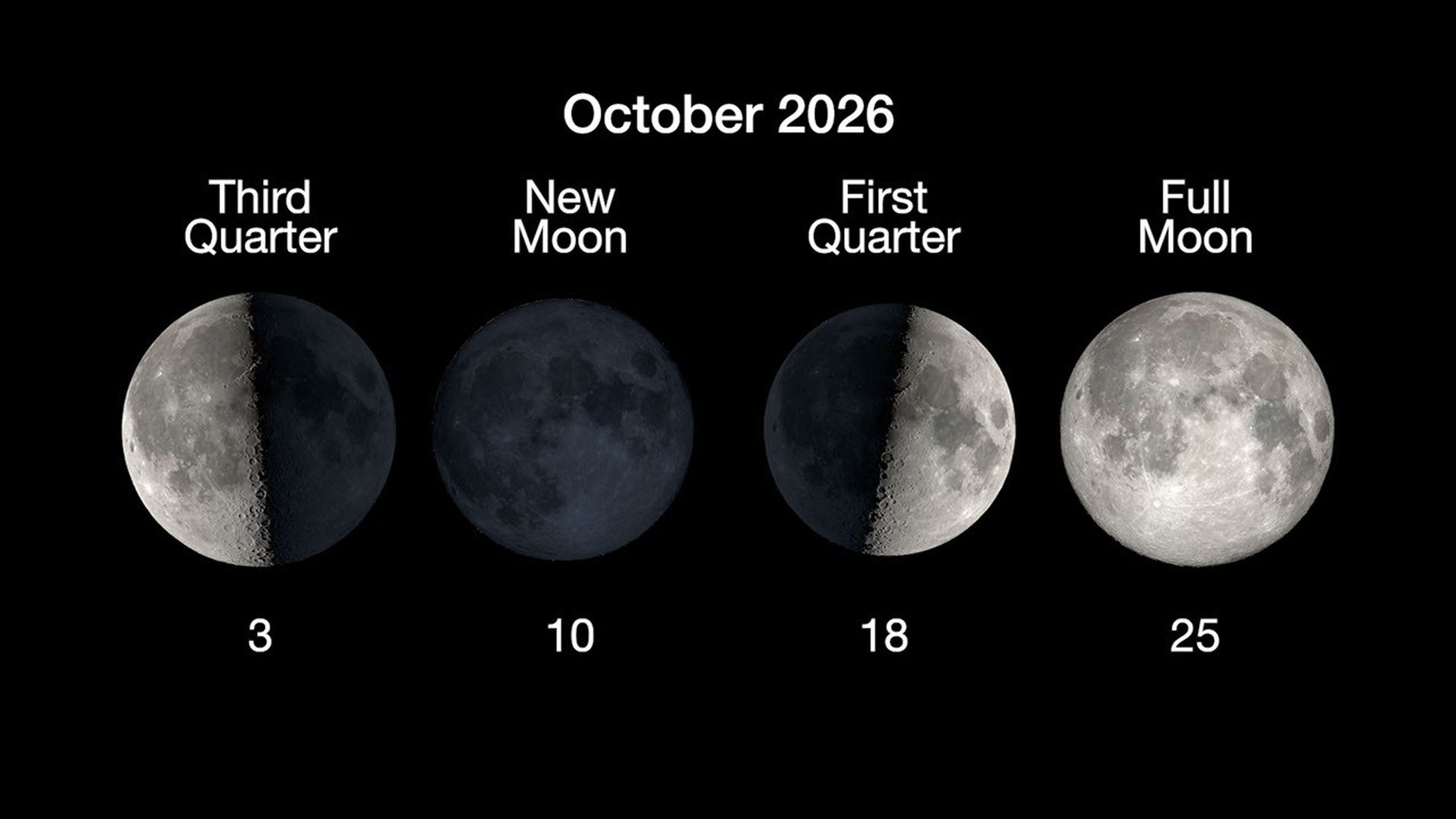
NASA’s October guide warns that a bright waxing gibbous Moon will hide fainter meteors. For this shower, an early-evening outing is a less promising choice than a clear, dark morning. Check your own city’s moonset before setting an alarm.
Read NASA’s October viewing guide ↗When should you watch?
| Question | Answer | What to do |
|---|---|---|
| Peak night | October 21–22 | Think Wednesday night into Thursday morning—not Thursday evening. |
| Best part of the night | After moonset, before dawn | Check local moonset and the start of morning twilight. |
| Other possible nights | Active October 2–November 7 | If the peak is cloudy, consider a nearby clear night. It is not a promise of the same activity. |
| Where it is visible | Northern and Southern hemispheres | Choose an open view with little artificial light. |
Peak and activity dates: NASA’s Orionids overview. The viewing window comes from NASA’s 2026 October guide.
Is there one exact start time?
No—this is not a broadcast with a scheduled start. The practical question is when your sky is dark enough. NASA’s October blog gives around 3 a.m. local time as a general moonset guide, but that is not a city-specific timetable.
Before leaving, look up moonset for your location and the morning of October 22. Then check the hourly cloud forecast for that same window. A clear evening forecast does not tell you whether the sky will stay clear before dawn.
How many meteors could you actually see?
NASA’s October 2026 blog estimates roughly 3–6 meteors per hour in suburban areas with some ambient light, with a few more in darker places. Its general Orionids overview gives 10–20 per hour under dark skies.
Those figures describe different conditions. The higher number is not a guaranteed count for your backyard this October. Moonlight, clouds and streetlights can all make a disappointing night out of an otherwise promising date.
Plan for a patient watch rather than a constant stream of shooting stars. A few minutes outside is a poor way to judge the whole night.
Where should you look?
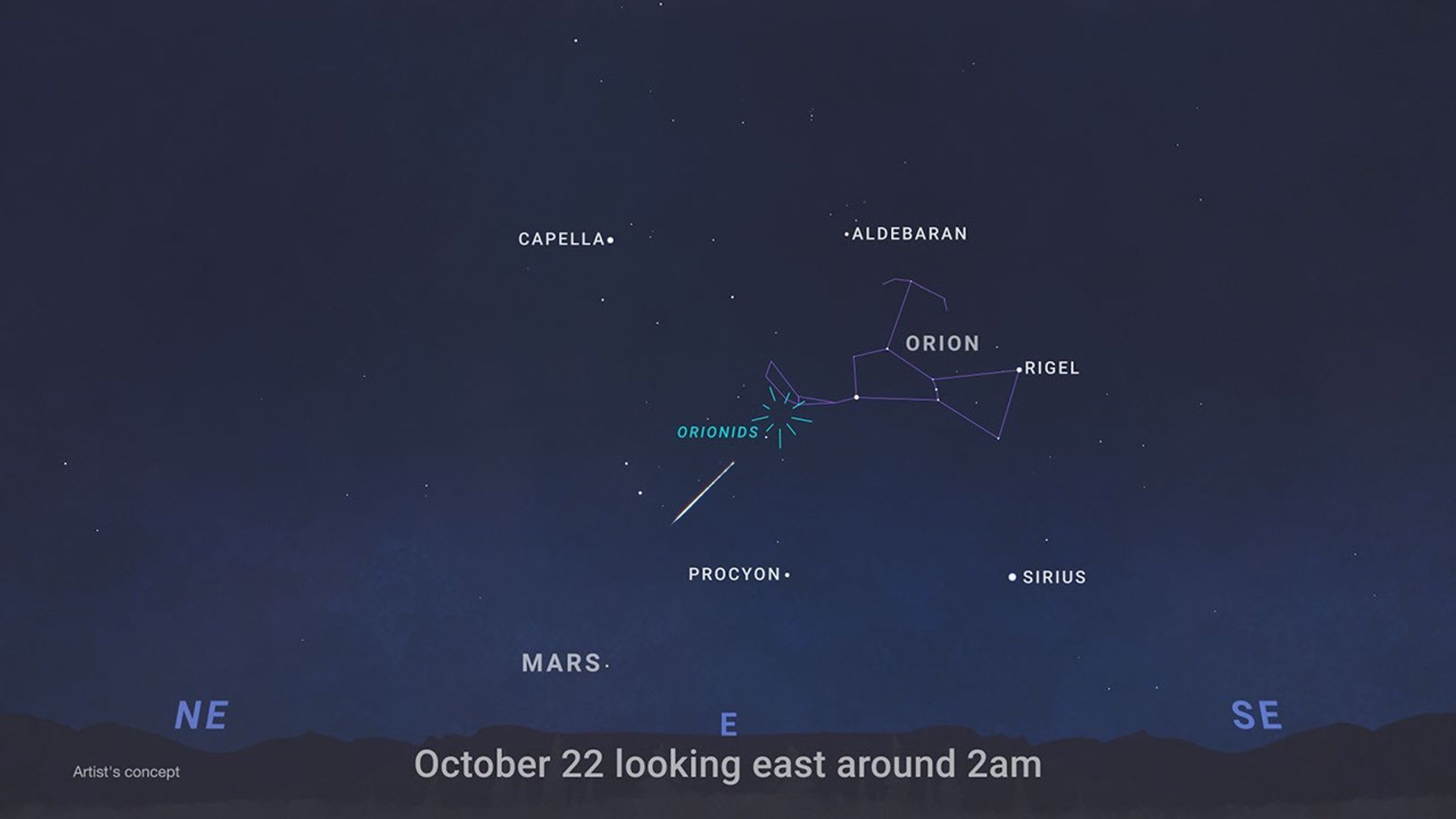
The shower’s name comes from its apparent starting point near Orion. NASA says meteors can appear across the sky, so do not spend the whole session staring at one star.
The sky chart at the top of this guide helps identify the radiant. Its “around 2am” label describes the illustrated sky; it is not a universal moonset time or the only time you can watch.
NASA recommends lying back with a broad view and allowing about 30 minutes for your eyes to adjust. Bring a blanket, sleeping bag or reclining chair. Keep the session comfortable enough that you are willing to stay and watch.
What should you take?
- A comfortable place to sit or lie back. Avoid turning the watch into an hour of craning your neck.
- Layers and a blanket. Plan for the temperature during your viewing window, not the afternoon high.
- Your route and local times saved in advance. Finish the planning before you settle down.
- A realistic backup. If thick cloud covers the sky, a darker location alone will not solve it.
These are our practical trip-planning suggestions. You can keep this simple: an accessible dark spot and a comfortable watch are more useful than a complicated equipment list.
Are these meteors Halley’s Comet?
They are debris left by Halley’s Comet, not the comet itself crossing your sky. Earth passes through that material, producing the streaks we call the Orionids.
You do not need to find Halley’s Comet to enjoy the shower. Use the date and sky conditions to plan your watch, and let the meteors come to you.
Sources & updates
Checked October 14, 2026. Dates and observing guidance come from NASA. The planning checklist is our editorial advice; local weather and moonset have not been forecast for individual cities.

